
£755k Ground-Up Development Finance at 66% LTGDV
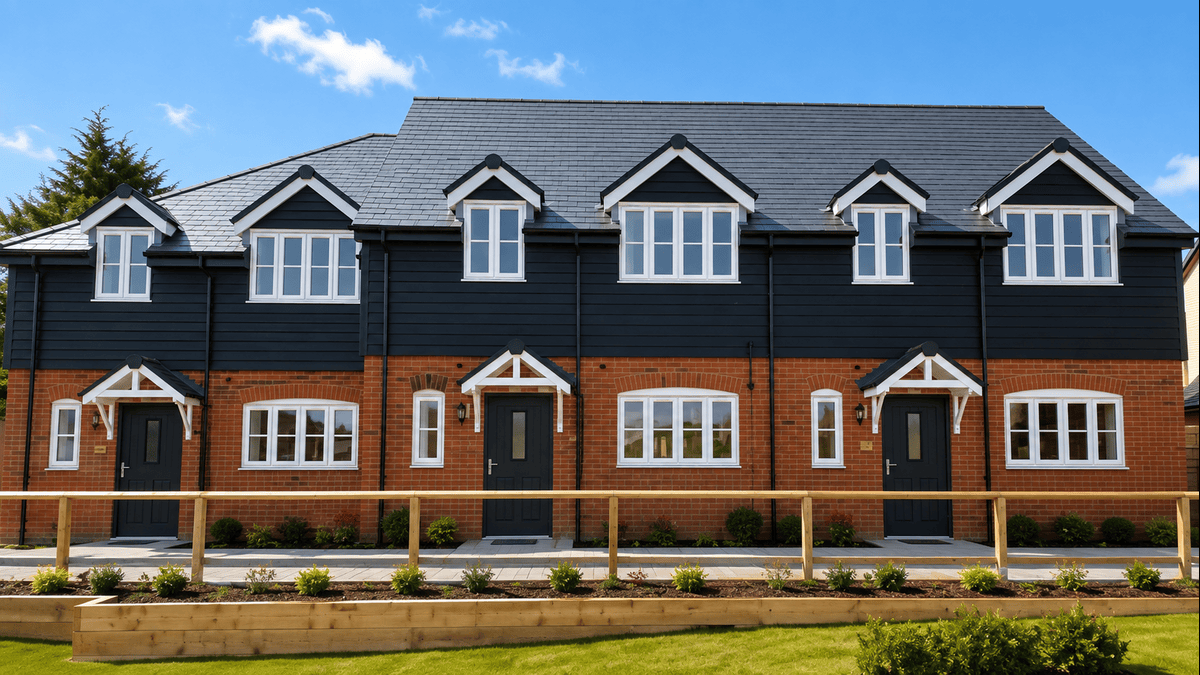
Colenko completed a £755,000 development finance facility to fund the acquisition and ground-up development of three three-bedroom houses in Buckinghamshire. The borrower was an experienced architect and contractor, but this was his first time developing a scheme in his own right, so we needed to put together a facility taking into account the strength of his professional background while still recognising that he didn’t yet have an established track record as a standalone developer.
As the project progressed, rising costs and supply chain disruption affected the original programme. Colenko focused on whether the scheme could still be delivered and whether the sales exit remained realistic. This led to the facility being extended, giving the borrower the time needed to finish the works.
Deal Snapshot
| Borrower type | Corporate Borrower |
| Loan product | Development Finance |
| Facility size | £755,000 |
| Security | First legal charge over residential property |
| Location | Buckinghamshire |
| Leverage | 66% LTGDV |
| Rate | 0.89% per month |
| Term | 15 months |
| Exit strategy | Sale of completed properties |
| Special Feature | Facility Extended for 6 months |
Borrower Profile
The applicant ran an architectural practice specialising in residential development projects. He had worked as both an architect and contractor and had completed several development projects in a private capacity. His credit profile was strong, and the original underwriting recorded no credit, fee or underwriting exceptions.
Although this was his first development in his own right, his professional background was directly relevant. His experience gave us confidence that he understood the development process and could manage the practical issues that arise during a build. We still took his limited track record as a standalone developer into account throughout our assessment.
The Opportunity
The borrower wanted to acquire a site in Buckinghamshire, build three traditionally designed three-bedroom houses and sell them. We agreed a £755,000 facility at 66% LTGDV and 0.89% per month. It included a £135,000 loan on day one and £537,000 in development drawdowns. Together, these covered the site acquisition and the works, with repayment through the sale of the completed homes.
Key Challenges
During the term of the loan, inflationary pressures led to increases in the cost of materials and labour, while wider economic disruption affected the availability of trades and caused delays in the supply of materials and other key items. These factors disrupted the sequencing of works and meant that certain stages of the project took longer to complete than originally anticipated.
As a result, the development fell behind the programme envisaged when the facility was agreed. The facility therefore had to be managed dynamically around actual progress on site, with funding and ongoing management responding to the timing and completion of works rather than following the original timetable established at completion.
Colenko’s Approach
Development projects do not always follow the programme anticipated at completion. When circumstances change, our approach is to reassess the facility against what is actually happening on site rather than rely solely on the original timetable.
We consider whether the remaining works can still be completed, whether the funding and timescales remain appropriate and, importantly, whether there is still a credible route to repayment. Where those fundamentals remain sound, we can adapt the facility to reflect the position on the ground while continuing to manage the underlying risk.
Execution
In this case, the original facility had a 15-month term, including nine months of drawdown availability. Inflationary pressures, supply chain disruption and delays to materials and trades affected the construction programme and pushed completion beyond the original timetable.
We reviewed the remaining works, revised completion timetable and proposed sales exit and concluded that the development remained capable of completion with a realistic route to repayment. We therefore extended the facility by six months, giving the borrower sufficient time to finish the works rather than forcing an exit simply because the original timetable had slipped.
We also took a proportionate approach to monitoring the exit. Rather than automatically requiring a further formal valuation and adding unnecessary cost for the borrower, we considered the expected sales programme and timing of incoming funds. We spoke directly with the selling agents to understand current demand and likely sale proceeds, giving us up-to-date market evidence against which to assess the exit and continue managing the facility.
The Outcome
When external pressures delayed the programme, we agreed a six-month extension to give the borrower sufficient time to complete the works without the pressure of the original maturity date. Repayment was expected from the sale of the completed properties, so we based our decisions on the anticipated sales timetable and timing of incoming funds.
What this Demonstrates
- We extend facilities where project fundamentals remain sound and additional time provides a credible route to repayment.
- We manage facilities around actual project progress rather than allowing original maturity dates alone to drive decisions.
- We can avoid incurring revaluation costs by using direct market evidence, including agent feedback, where it can provide sufficient oversight.
- We assess extensions against remaining works, completion timescales and expected sales proceeds rather than simply granting additional time.
- We adapt facility management when external pressures disrupt otherwise viable development projects.
If you’re a developer looking for a lender that will consider your experience in context and take a practical approach when circumstances change during a build, speak to Colenko about funding for ground-up residential development.